

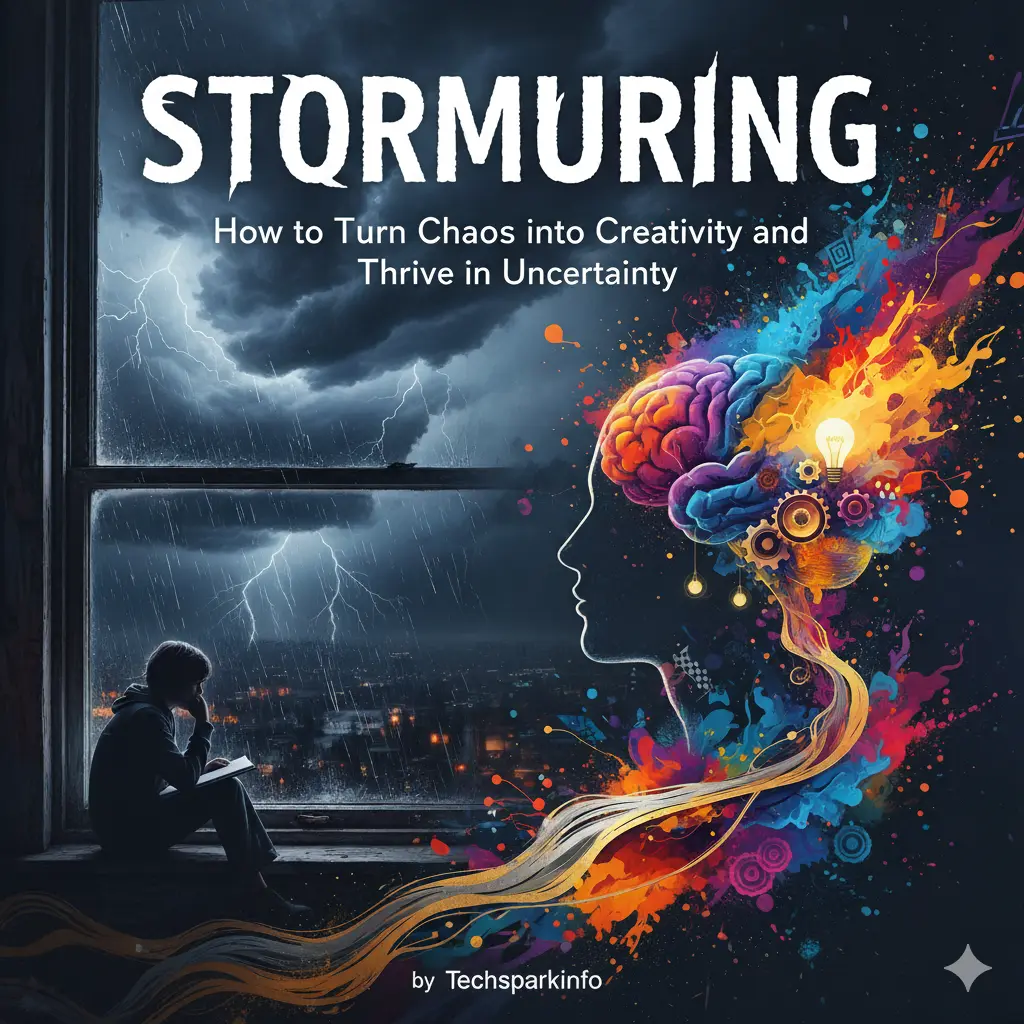
Have you ever watched a thunderstorm from your window and felt a strange mix of fear and fascination? That electric tension in the air — unpredictable yet beautiful — is what Stormuring represents. It’s the meeting point of chaos and creativity, the space where disorder becomes the spark for ideas that change everything. In a world obsessed with control, we often forget that creativity thrives in uncertainty. Nature doesn’t plan every drop of rain or every bolt of lightning — yet it creates beauty, rhythm, and power. The same applies to human creativity. For instance, platforms like Nurad Editor are designed to help creators work fluidly even in fast-changing digital environments.
What Is Stormuring?
At its essence, Stormuring is the art of harnessing chaos to ignite creativity. It’s about seeing disruption as a source of energy, not fear. Just as lightning brightens the darkest skies, unpredictable moments can illuminate the path to invention and expression. It’s not a technique — it’s a mindset. It invites you to stop waiting for calm conditions and instead create in the middle of the storm. Whether you’re an artist, business leader, teacher, or student, the principle is universal: the energy of chaos can drive your next breakthrough. Instead of asking, “How do I survive the storm?”, ask, “What can I build from it?” That shift changes everything.
The Birth of a Concept
The term blends “storm” and “stirring” — capturing the idea that a storm stirs our emotions, thoughts, and creativity. Throughout history, chaos has inspired innovation. Van Gogh’s swirling skies, Beethoven’s tempestuous symphonies, and even Da Vinci’s fascination with weather all show that turbulence fuels artistry. Today, this concept has evolved beyond art. It influences psychology, business strategy, and digital innovation. It teaches us that unpredictability isn’t a flaw in the system — it is the system. True creativity doesn’t resist chaos; it dances with it.
Why the World Needs Stormuring Now
We live in an era defined by rapid transformation. Artificial intelligence is rewriting industries. Economic trends shift overnight. Social media changes culture in days, not years. In this environment, those who cling to certainty often fall behind, while those who adapt thrive. That’s why this philosophy matters now more than ever. It trains us to stay flexible, creative, and courageous in uncertainty. By learning to channel disruption, you turn instability into insight.
The Key Reasons It Matters:
- Builds resilience: Teaches how to find direction within disorder.
- Sparks creativity: Shatters old patterns, making room for new ideas.
- Encourages innovation: Forces problem-solving through experimentation.
- Boosts emotional strength: Turns stress into self-awareness and growth.
Every storm, literal or metaphorical, becomes a training ground for innovation and adaptability.
The Science of Chaos and Creativity
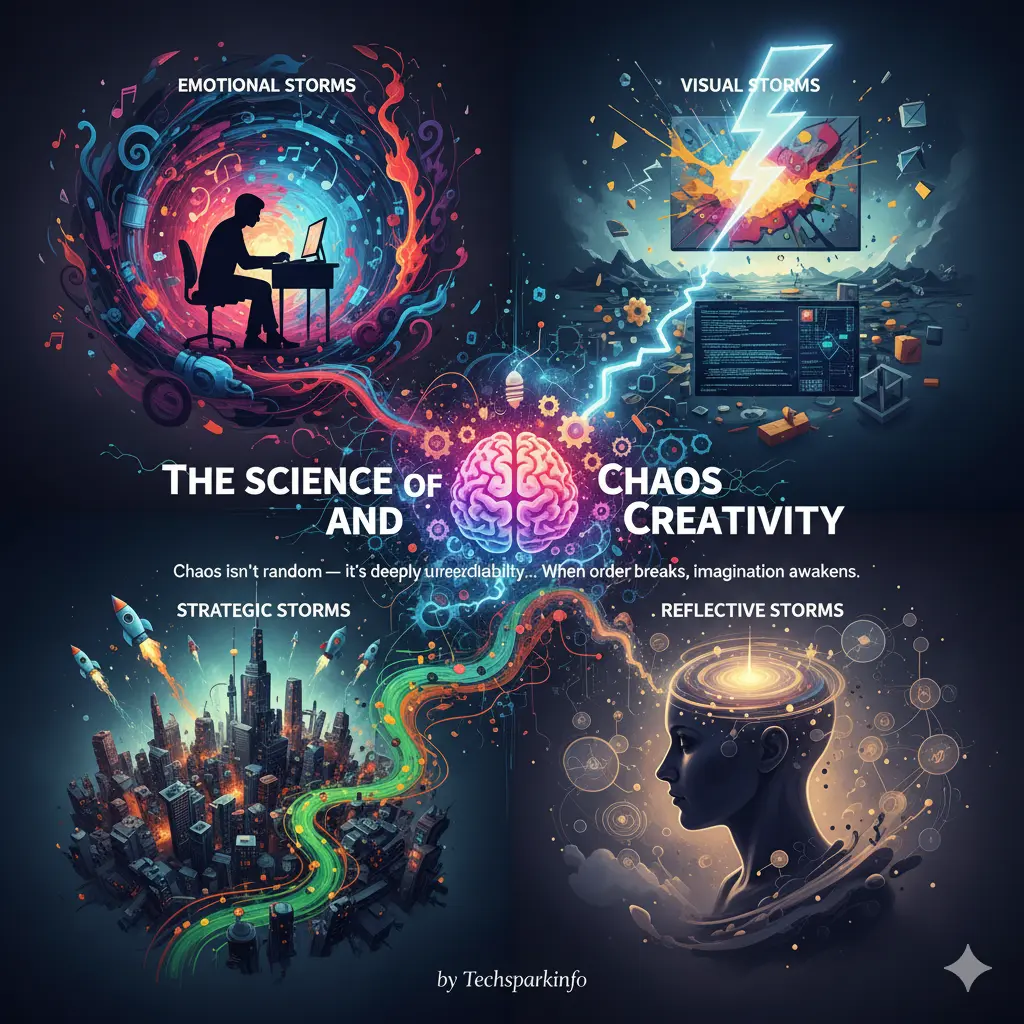
Chaos isn’t random — it’s deeply structured unpredictability. Psychology and neuroscience reveal that when we face uncertainty, the brain lights up differently. Familiar situations trigger routine thinking, but unpredictable ones spark new neural connections. This is where creativity thrives. When order breaks, imagination awakens. The brain starts making unconventional links, generating fresh insights. Scientists call this divergent thinking — the ability to approach problems from multiple angles. In other words, creativity often needs a jolt — a disruption strong enough to shake us out of habit and into discovery. That’s the power of chaos when harnessed with purpose.
The Many Faces of Creative Storms
Just as no two thunderstorms are identical, no two creative processes look the same. The energy of chaos manifests differently for everyone.
1. Emotional Storms
Emotion is raw creative power. Frustration, love, heartbreak, or anger can all become creative fuel. Writers, musicians, and painters often produce their most honest work when they channel emotion instead of suppressing it.
2. Visual Storms
Nature’s chaos has always inspired visual art. Lightning photography, abstract painting, or digital design that captures movement and contrast — all reflect the beauty hidden in disorder.
3. Strategic Storms
In business and innovation, chaos can lead to breakthrough ideas. Startups often emerge from uncertainty — they thrive by adapting, experimenting, and taking bold risks while larger competitors hesitate.
4. Reflective Storms
Not all storms are external. The battles inside your own mind — self-doubt, confusion, or conflicting goals — can also fuel deep reflection. When you face your internal storms honestly, they often reveal new clarity and direction. Each type shows that chaos, when embraced, becomes a creative catalyst instead of a source of fear.
How to Practice Stormuring in Everyday Life
Stormuring isn’t something that happens by accident. It’s something you can nurture deliberately. Adopting this mindset means learning how to stay grounded in motion, calm in noise, and creative in uncertainty.
1. Embrace Discomfort
Creativity doesn’t grow in comfort zones. When life feels messy, pause instead of running from it. Ask yourself, “What is this moment trying to teach me?”
2. Create Amid the Storm
Don’t wait for clarity to begin. Paint when you’re unsure. Write when you’re tired. Plan when the path isn’t clear. The act of creating during chaos often leads to your most original work.
3. Observe Nature’s Lessons
Watch storms — not just literally, but symbolically. Notice how lightning strikes, how the wind shifts, how rain falls unpredictably yet rhythmically. Nature’s chaos has a design hidden in motion.
4. Reflect and Reframe
Once the storm passes, reflect on what you’ve learned. Every disruption carries meaning. By reframing challenges as creative opportunities, you transform stress into strength.
Stormuring Across Industries
This philosophy doesn’t just inspire artists — it’s transforming industries.
Art and Design
Artists use it to experiment boldly with form, texture, and motion. The unpredictability of color, contrast, or material becomes the language of innovation.
Business and Marketing
Brands that embrace uncertainty stand out. Companies like Nike and Netflix thrive on calculated risk. They disrupt trends instead of following them — a direct reflection of this creative mindset.
Education
Modern educators use “creative chaos” to encourage critical thinking. Instead of memorization, they introduce real-world challenges with unpredictable outcomes. Students learn adaptability — a skill far more valuable than perfection.
Technology
Tech leaders use adaptive systems that evolve in real time. The same principle applies to creativity: flexibility and responsiveness drive progress. Many breakthroughs in AI and automation are built on embracing uncertainty, not avoiding it.
Healthcare
Even medicine benefits from creativity under pressure. From developing new treatment models to designing tech that saves lives, healthcare innovation often begins with a storm of ideas and conflicting perspectives — until clarity emerges.
The Core Principles of a Storm Mindset
There’s no strict formula, but most innovators and creators who live by this philosophy follow three main principles:
1. Adaptability – Stay flexible. Learn to adjust without losing your core.
2. Spontaneity – Allow creativity to flow freely. Some of the best ideas happen unplanned.
3. Transformation – Turn energy into motion, motion into progress. Chaos can always become creation if you guide it. These three pillars keep creativity alive, even when everything else feels uncertain.
Traditional Thinking vs. Creative Chaos
Traditional creativity thrives on structure, rules, and predictability. That works — until it doesn’t. In today’s world, where trends shift by the hour, rigid thinking limits innovation. By contrast, the storm mindset is flexible, open, and experimental. It doesn’t ask, “What’s the safest option?” but rather, “What happens if we try something different?” That question alone has sparked countless revolutions in art, science, and business. Breakthroughs rarely come from stability — they come from the courage to explore the unknown.
Building Your Personal Brand with Storm Energy
If you want to stand out in the digital world, authenticity is your most powerful tool. Share your story honestly — including the challenges, the missteps, and the transformations. Audiences crave connection, not perfection. When you embrace chaos publicly — trying new formats, experimenting with tone, revealing behind-the-scenes struggles — your personal brand becomes real. People trust what feels human. In short, be unpredictable. Surprise your audience. Let your creative process show, not just the final product. That’s where true engagement lives.
The Rewards of Embracing the Storm
When you commit to this mindset, several deep changes happen within you and your work:
- Creativity multiplies. New ideas emerge naturally because fear no longer controls you.
- Emotion becomes fuel. You learn to channel feelings into productive expression.
- Innovation accelerates. You stop waiting for certainty and start experimenting.
- Adaptability strengthens. The more storms you face, the calmer you become. Chaos stops being an enemy and becomes a creative ally. You learn to surf the waves instead of drowning in them.
Overcoming the Difficult Parts
Of course, embracing chaos isn’t easy. The unknown can feel uncomfortable. To manage it effectively, balance openness with grounding. Try mindfulness, journaling, or creative rituals that keep you centered. Let your ideas flow freely but direct them with purpose. You don’t have to control the storm — you just have to navigate it wisely. With time, you’ll notice that unpredictability becomes less frightening and more energizing.
Stormuring in the Digital Era
We live in an age where imperfection is finally being celebrated. Social platforms have made authenticity more valuable than polish. Artists and influencers now embrace storm-like aesthetics — dynamic visuals, bold contrasts, and emotional storytelling. The reason? It feels real. People connect with content that reflects life’s chaos — not filtered perfection.
The Future of Creativity and Chaos
As artificial intelligence and automation reshape industries, creativity is evolving too. Machines can predict patterns, but they can’t replicate human intuition — the spark born from chaos. The future will favor those who adapt quickly, think freely, and innovate under uncertainty. Businesses, artists, and thinkers who master this mindset will lead the next creative revolution. In that world, the ability to balance structure and spontaneity — order and chaos — will be the ultimate creative advantage.
Frequently Asked Questions (FAQs)
What does Stormuring mean?
Stormuring is a creative philosophy that turns chaos, disruption, and uncertainty into sources of innovation.
How can I apply Stormuring in my daily life?
You can practice Stormuring by embracing moments of discomfort instead of running from them.
Why is Stormuring important for business and innovation?
In fast-changing industries, businesses that adapt quickly survive. Stormuring helps companies turn crises into creative opportunities.
What is the connection between chaos and creativity?
Chaos pushes the brain out of routine thinking and into new connections. When your comfort zone breaks, creativity rises. That’s why unpredictable experiences — failures, changes, or emotional storms — often lead to the most original ideas.
Can anyone learn the art of Stormuring?
Yes. Stormuring isn’t a talent — it’s a mindset. Anyone can learn to see challenges as opportunities by practicing curiosity, resilience, and creative openness.
Conclusion
Not every storm destroys; some awaken. Stormuring reminds us that within every moment of disruption lies the potential to create something extraordinary. The challenge isn’t to hide from chaos but to listen to it. Every thunderclap, every gust of wind, every unexpected turn in life carries wisdom and energy. When you stop fearing the unpredictable, you start shaping it. That’s the secret — creativity is born in the storm, not after it. So next time life feels turbulent, don’t retreat. Stand in the middle of it. Feel the rhythm, hear the noise, and ask yourself one question: What masterpiece can I make out of this?