

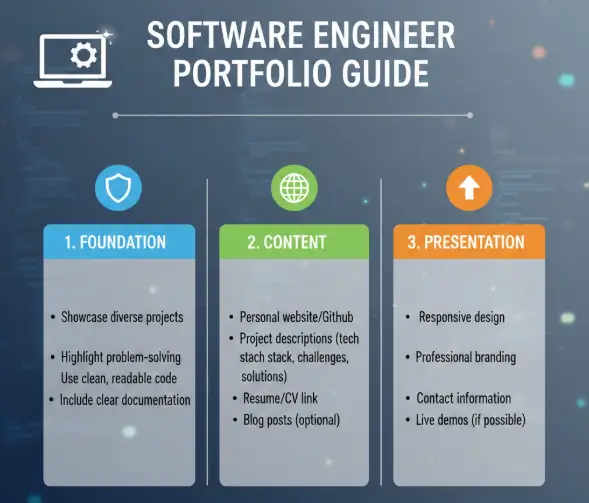
A software engineer portfolio is more than a collection of projects. It is a decision-making tool that shows recruiters what you can do in seconds and helps you follow a software engineer roadmap to plan your career effectively. Most junior developers assume that having GitHub links or a long resume is enough, but the reality is different. Recruiters spend an average of 5–10 seconds scanning a portfolio, and if they can’t immediately see your skills and results, you risk being passed over.
A well-structured portfolio demonstrates problem-solving ability, technical skill, and clarity of communication. It acts as proof that you can deliver real-world solutions, not just complete tutorials. In this guide, we’ll go through what to include, how to structure your portfolio, and what projects truly impress hiring managers in 2026.
Why a Portfolio Matters More Than a Resume
A resume lists your skills; a portfolio proves them. While resumes are scanned for keywords, portfolios let recruiters see your work in action, especially if you are exploring self-taught developer. This visual proof is particularly valuable for entry-level and mid-level engineers who may not have extensive work experience.
For example, one junior developer I reviewed had five small tutorial projects on GitHub. None showed problem-solving or teamwork. After restructuring their portfolio to highlight three real-world projects with measurable results, they received four interview calls within two weeks. This shows that quality always beats quantity.
What Recruiters Look for in a Portfolio
Recruiters don’t read everything. They look for clarity, relevance, and impact. Here’s what matters most:
- Clear Project Descriptions: Each project should explain the problem, your role, the technologies used, and the results achieved.
- Demonstrated Skills: Use projects to highlight your core tech stack. For instance, a full-stack project should show both backend logic and frontend design, reflecting key skills for software engineers.
- Live Demos or Screenshots: If a recruiter can interact with your project, they immediately understand your capabilities.
- Organization: A confusing portfolio loses attention fast. Projects should be logically grouped and easy to navigate.
Remember: recruiters decide to dive deeper within the first few seconds. If your portfolio is messy, your skills won’t matter.
Core Sections Every Software Engineer Portfolio Must Include
A professional portfolio is structured. Each section should serve a purpose, helping you follow a software engineer career timeline to showcase your growth effectively.
Professional Introduction
Your introduction should be short, precise, and human. Avoid generic statements like “I am passionate about coding.” Instead, write:
“I build web applications that solve real business problems. My focus is on clean code, scalable architecture, and delivering measurable results.”
This immediately shows purpose and capability.
Skills and Technology Stack
List the technologies you actively use. Instead of a long laundry list, focus on proficiency and experience:
- JavaScript, React, Node.js
- Python, Django
- SQL, MongoDB
- REST APIs, GraphQL
Include context: for example, “Built an e-commerce app using React and Node.js to manage 500+ daily users”. This shows recruiters the scale and depth of your work.
Portfolio Projects
This is the heart of your portfolio. Choose 2–4 high-quality projects instead of overloading with tutorials. Each project should include:
- Problem Statement: What real-world problem does it solve?
- Your Role: What did you contribute?
- Technologies Used: Be specific.
- Outcome: Metrics or achievements, e.g., “Reduced page load time by 30%”
- Visual Proof: Screenshots, live demo, or GitHub link
Example:
Project: Expense Tracker App
- Problem: Users struggle to track daily spending.
- Role: Built full-stack solution with React frontend and Node.js backend.
- Outcome: Successfully tracked over 1,000 transactions; app deployed on Heroku with user authentication.
This format tells a story, not just lists features.
How Many Projects Should You Include
More is not better. Recruiters value curation over quantity.
- 2–3 strong projects: Ideal for juniors
- 3–5 projects: Suitable for mid-level engineers
- Remove old or irrelevant projects that don’t showcase skill or impact
A smaller set of high-quality projects is easier to digest and highlights your strongest capabilities.
Portfolio Website vs GitHub Only
Some developers wonder if GitHub is enough. The answer depends on your audience and the degree vs bootcamp vs self-taught debate for your learning path.
- Junior engineers: A personal website with projects shows initiative and design sense.
- Experienced engineers: GitHub can suffice if projects are well-documented and live demos are linked.
A personal portfolio website also allows you to control branding, narrative, and visual layout, which recruiters notice subconsciously.
How to Build a Portfolio Website
You have three main options:
- Code It Yourself: Use React, Next.js, or plain HTML/CSS. Great for showing technical skill.
- Templates: Use modern, clean templates to save time, but customize to avoid generic look.
- No-Code Builders: Tools like Wix or Webflow let you build quickly, ideal if coding time is limited.
You can also explore more portfolio building guides and resources to get inspiration and best practices.
Ensure your portfolio is:
- Mobile-friendly
- Fast-loading (<2 seconds)
- Accessible (clear text, readable fonts)
- SEO-optimized so recruiters can find you
Common Portfolio Mistakes That Kill Interviews
Avoid these pitfalls:
- Overloading with tutorial projects
- Not explaining your role or problem solved
- Broken links or missing live demos
- Overcomplicated design that distracts from content
- Ignoring mobile and load speed
Tip: Always ask a peer or mentor to review your portfolio before sending it out. They notice clarity issues faster than you do.
Optimizing Portfolios for Different Roles
A portfolio must align with your target role:
- Frontend Developer: Emphasize UI/UX, animations, responsive design
- Backend Developer: Focus on APIs, database architecture, scalability
- Full-Stack Developer: Show both frontend polish and backend logic
- Junior vs Mid-Level: Juniors can include educational or bootcamp projects; mid-level engineers should show measurable business impact
Recruiters can quickly tell if your portfolio matches the job description, so align projects with roles you apply for.
Personal Experience and Real-World Insights
In my experience reviewing portfolios for hiring managers, these points stand out:
- Clarity beats complexity: A simple, clear project that solves a real problem impresses more than flashy but shallow projects.
- Context matters: Recruiters want to see the problem and impact, not just code.
- Iterate and update: Portfolios are never “done.” Regularly add new projects and remove outdated ones.
For example, one junior developer switched from listing five generic tutorial apps to three real projects with live demos and detailed outcomes. Within two months, they landed three interview calls at top tech firms.
Final Checklist Before You Submit Your Portfolio
- Each project explains problem, role, technologies, and outcome
- Portfolio is visually clean and navigable
- GitHub links and live demos work correctly
- Mobile version tested
- Load speed under 2 seconds
- Skills and tech stack clearly listed
- Portfolio aligns with your target job
This bulletproof checklist ensures your portfolio is recruiter-ready and stands out in 2026.
FAQs
Do I really need a software engineer portfolio?
Yes. A portfolio proves your skills in real-world projects, not just your resume. It shows recruiters what you can build, making you stand out, even if you have limited professional experience.
How many projects should I include?
Focus on 2–4 strong projects. Quality beats quantity. Highlight projects that demonstrate real problem-solving, technical skills, and measurable outcomes. Too many tutorial projects can distract recruiters and reduce impact.
Can GitHub alone replace a portfolio website?
Only partially. GitHub shows code but often lacks context and presentation. A clean portfolio website communicates clarity, results, and impact, helping recruiters understand your role and skills at a glance.
What types of projects impress recruiters most?
Real-world problem-solving projects with measurable outcomes stand out. Full-stack apps, API integrations, or apps solving user pain points are better than tutorials. Always explain your role and technologies used.
Do I need a portfolio if I’m a junior developer?
Absolutely. Even minimal experience can shine if you present projects clearly, show problem-solving ability, and highlight technical skills. A curated portfolio can open doors faster than a resume alone.
Should I build the portfolio myself or use templates?
Both work. Coding it yourself shows technical skill. Templates save time but must be customized to avoid looking generic. Focus on clarity, project explanation, and recruiter-friendly design.
Will recruiters actually check my portfolio?
Yes. Recruiters scan portfolios to verify skills and assess fit. A poorly structured portfolio is ignored. A clear, concise, impactful portfolio increases interview chances significantly.
How often should I update my portfolio?
Update it regularly. Remove outdated projects, add new work, and ensure demos and links work. An updated portfolio shows growth, initiative, and attention to detail.
Conclusion
A software engineer portfolio is your chance to prove you can deliver real-world solutions. Focus on quality over quantity, structure your projects clearly, and always keep the recruiter’s perspective in mind.
A curated, purposeful portfolio will open doors faster than a long resume or a cluttered GitHub profile. Build it with intention, update it regularly, and always showcase impact, clarity, and technical depth. Learn more tips and guides at the TechSpark Info blog to stay ahead in your career.
Your portfolio isn’t just a collection of projects; it’s your personal brand and your fastest path to landing interviews.