

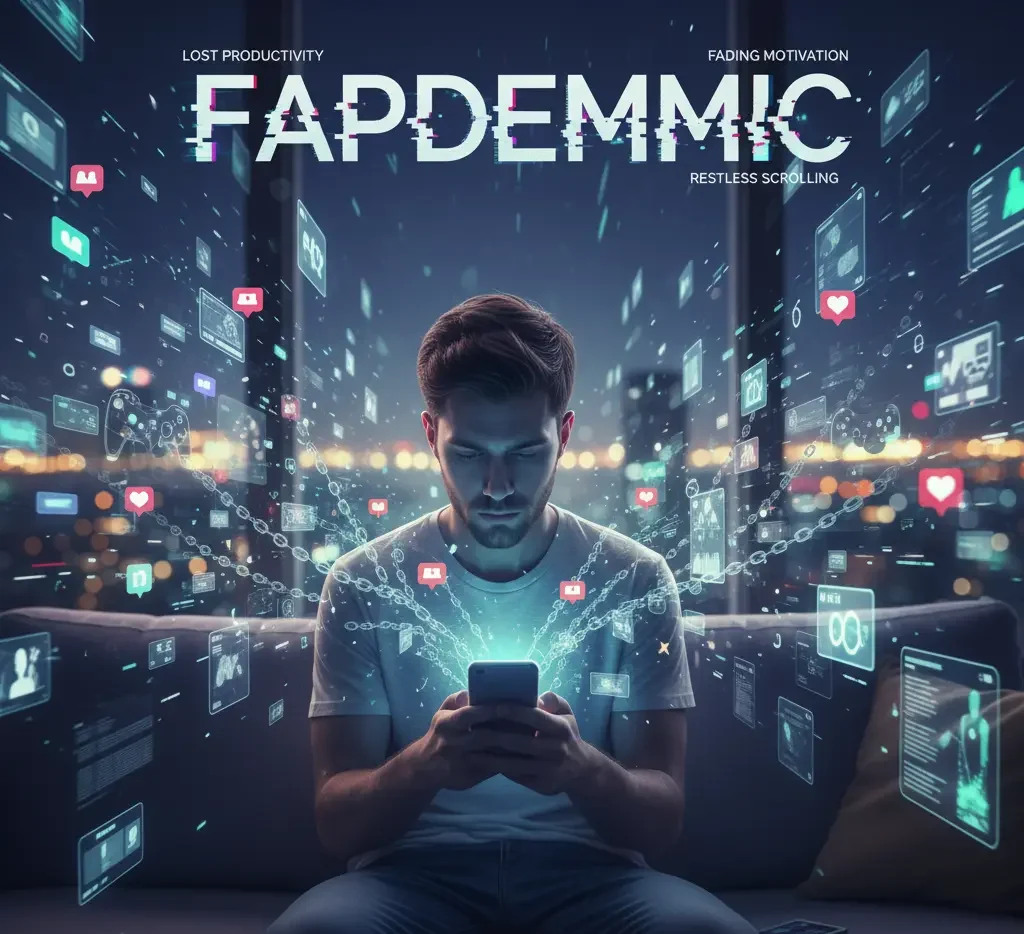
A quiet behavioral revolution is reshaping how people chase pleasure and purpose. It doesn’t erupt in protests or dominate the evening news, yet its fingerprints appear in lost productivity, fading motivation, and restless scrolling. Experts have begun calling this hidden crisis the fapdemic—a symbol of how constant digital gratification rewires human drive.
A New Kind of Exhaustion
The twenty-first century promised infinite creativity and connection. Instead, many wake up tired before the day begins. Behind glowing screens, dopamine hits arrive faster than effort can follow. The cycle repeats until ambition fades into background noise. Moments of rest have turned into endless loops of digital stimulation that mimic success but deliver emptiness—something modern automation tools like Mylt34 aim to counter by helping people regain focus, structure, and meaningful productivity in a distracted world.
Beyond the Meme
The term sounds humorous, born from internet slang, yet it hides a serious message. The fapdemic is not limited to explicit content or simple addiction. It represents the entire overstimulation economy—a marketplace of instant validation trading attention for temporary pleasure.
Why It Matters
Attention is now the world’s most contested resource. Every notification and algorithm competes for fractions of a second. When each moment carries potential reward, the brain’s chemistry adapts by lowering its threshold for satisfaction. The result is subtle fatigue: constant craving mixed with a lack of meaning.
The Dopamine Economy and Its Price
The Chemistry of Wanting
Dopamine fuels pursuit more than pleasure. Balanced, it encourages learning and exploration. Overused, it traps the brain in anticipation mode. Algorithms engineered for engagement exploit this loop, delivering micro-rewards that feel satisfying but drain long-term focus.
How Overstimulation Rewires Motivation
Every swipe or click teaches the mind that reward should be effortless. Tolerance builds, and ordinary life feels dull. People chase stimulation even when it leaves them emptier afterward. The fapdemic thrives in this pattern—a silent trade between convenience and vitality.
Cultural Disconnection
Isolation, frictionless technology, and reduced physical interaction have created a fertile ground for overstimulation. Lockdowns intensified it, but the pattern continues. Digital comfort is now easier than real companionship, producing a generation that interacts constantly yet feels profoundly alone.
The Roots of Distraction
Connected Isolation
Online activity creates the illusion of belonging while emotional bonds weaken. People view thousands of updates but share little real intimacy. The fapdemic grows in this loneliness gap, where digital validation replaces human connection.
The On-Demand Trap
Patience has nearly vanished. Food, shows, and relationships appear instantly. This convenience trains the mind to equate effort with discomfort. When gratification speeds up, resilience erodes.
Shifting Masculinity
While overstimulation affects everyone, young men face unique pressures. Economic uncertainty and cultural confusion blur traditional goals. Many retreat into digital spaces that simulate achievement—games, feeds, fantasies—without real-world risk. The fapdemic exposes that retreat as both symptom and cause of a larger identity drift.
The Neurological Fallout
Desensitized Brains
Continuous stimulation lowers dopamine receptor sensitivity. The more frequently reward circuits fire, the less responsive they become. Reading, learning, or exercising lose their spark. These changes are not moral failures but biological responses to unnatural reward patterns.
Loops of Stress and Shame
When dependency becomes obvious yet hard to break, guilt feeds anxiety, which feeds avoidance. The loop deepens as shame pushes people back toward escape behaviors. Recovery begins by recognizing that chemistry, not character, drives the cycle.
The Productivity Paradox
Technology gives unmatched creative tools, yet output stagnates. Many professionals admit they can’t concentrate long enough to use those tools. Pleasure without friction makes work feel disproportionately difficult. Reclaiming focus means re-training the brain to link satisfaction with effort again.
The Mental Health Connection
Hidden Symptoms
Anxiety, depression, and apathy often share one cause: overstimulated reward circuits. People feel numb rather than sad. Therapists trace these states to digital excess. The fapdemic compounds it by layering novelty, isolation, and guilt into one behavioral spiral.
Expert Warnings
Neuroscientists call this a global self-experiment with no safety rules. Each scroll strengthens the craving for novelty. Without intentional rest, the mind forgets how to enjoy simplicity. Attention fades, and identity blurs.
Society’s Mirror
The fapdemic reflects a deeper cultural emptiness. When meaning declines, pleasure fills the gap. Constant entertainment muffles reflection. What seems like laziness may be exhaustion—a defense against relentless input.
The Reboot Generation
A Counter-Movement Emerges
Across online forums and local meetups, a new culture of recovery is forming. Participants share progress, count “streaks,” and celebrate clarity returning. They call themselves the Reboot Generation—individuals choosing discomfort over numbness.
What Recovery Looks Like
After two weeks away from compulsive habits, many report sharper focus. After a month, confidence returns. After three months, new passions replace old ones: fitness, learning, entrepreneurship. These stories are more than anecdotes—they’re evidence that neuroplasticity works both ways, a truth explored in depth through platforms like FFbooru, which highlight how digital behavior reshapes focus, creativity, and self-discipline in the modern era.
Building Momentum
Momentum is medicine. Each day of control strengthens self-trust. Small victories—reading a chapter, finishing a workout—restore dopamine balance naturally. The opposite of quick pleasure is earned satisfaction, and it heals the same circuitry that addiction erodes.
Breaking the Cycle
Step 1: Audit Inputs
List every trigger that sparks the craving for easy dopamine—social media, late-night scrolling, even mindless news loops. Awareness interrupts autopilot.
Step 2: Replace, Don’t Just Remove
Cold-turkey deprivation rarely lasts. Replace overstimulation with meaningful effort: journaling, sports, volunteering, creative work. These generate slower but deeper rewards.
Step 3: Track Progress
Visual proof of consistency keeps motivation alive. Habit apps or simple calendars transform streaks into visible progress, reinforcing the brain’s link between discipline and satisfaction.
Step 4: Find a Tribe
Accountability turns isolation into community. Digital detox groups, local clubs, and supportive friends make change sustainable.
Step 5: Embrace Discomfort
Growth feels awkward at first. Each moment of restlessness is proof the brain is recalibrating. Comfort returns once balance is restored.
Technology’s Responsibility
Algorithms Built to Hook
Most platforms profit from prolonged engagement. Their systems analyze behavior, predict cravings, and deliver perfectly timed stimuli. In this casino of attention, blaming users alone is unfair. The fapdemic exposes how design, not just desire, shapes dependency.
Toward Ethical Design
Some developers advocate for humane technology—apps that encourage breaks, transparent data policies, and friction that favors intentional use. Though adoption is slow, public demand for mental-health-friendly design is rising.
Balancing Power
True reform requires both sides: individuals taking responsibility for habits and corporations acknowledging their psychological impact. Only then can society move from exploitation toward empowerment.
The Philosophy Beneath the Habit
What Are We Really Chasing?
Beneath every scroll lies a search for something deeper—validation, connection, escape. The fapdemic symbolizes humanity’s struggle with abundance: more stimuli, fewer anchors. It’s not about a single behavior but about how comfort erodes meaning.
Pleasure Versus Purpose
Pleasure feels safe; purpose demands effort. The modern challenge is rediscovering satisfaction in work, study, and relationships rather than pixels. When meaning returns, dependency fades naturally.
Redefining Success
Success is no longer measured by constant excitement but by sustained attention. In an overstimulated age, calm focus becomes a superpower.
The Way Forward
From Passive Pleasure to Active Purpose
Escaping the fapdemic means re-learning how to live intentionally. It’s not about rejecting technology but mastering it. Choosing effort over ease rewires the reward system back toward growth.
The New Discipline
Discipline today isn’t about strict routines but about managing attention. Protecting focus is the modern form of strength. Each deliberate action—reading, creating, connecting—restores control over the mind’s currency.
A Culture of Renewal
Imagine a society that values depth over speed, conversation over clicks, creation over consumption. The shift begins with individual choices multiplying into cultural momentum.
Beyond the Meme
The term sounds humorous, born from internet slang, yet it hides a serious message. The fapdemic is not limited to explicit content or simple addiction. It represents the entire overstimulation economy—a marketplace of instant validation trading attention for temporary pleasure.
Why It Matters
Attention is now the world’s most contested resource. Every notification and algorithm competes for fractions of a second. When each moment carries potential reward, the brain’s chemistry adapts by lowering its threshold for satisfaction. The result is subtle fatigue: constant craving mixed with a lack of meaning.
The Dopamine Economy and Its Price
The Chemistry of Wanting
Dopamine fuels pursuit more than pleasure. Balanced, it encourages learning and exploration. Overused, it traps the brain in anticipation mode. Algorithms engineered for engagement exploit this loop, delivering micro-rewards that feel satisfying but drain long-term focus. This cycle is not just about entertainment; it shapes habits, purchases, and even relationships. The same reward systems that keep people glued to videos influence impulse buying and emotional decision-making. When dopamine hijacks self-control, long-term goals like health, study, and savings lose the battle to short-term excitement.
How Overstimulation Rewires Motivation
Every swipe or click teaches the mind that reward should be effortless. Tolerance builds, and ordinary life feels dull. People chase stimulation even when it leaves them emptier afterward. The fapdemic thrives in this pattern—a silent trade between convenience and vitality.
Cultural Disconnection
Isolation, frictionless technology, and reduced physical interaction have created a fertile ground for overstimulation. Lockdowns intensified it, but the pattern continues. Digital comfort is now easier than real companionship, producing a generation that interacts constantly yet feels profoundly alone.
The Roots of Distraction
Connected Isolation
Online activity creates the illusion of belonging while emotional bonds weaken. People view thousands of updates but share little real intimacy. The fapdemic grows in this loneliness gap, where digital validation replaces human connection.
The On-Demand Trap
Patience has nearly vanished. Food, shows, and relationships appear instantly. This convenience trains the mind to equate effort with discomfort. When gratification speeds up, resilience erodes. The on-demand era has quietly changed expectations in work and relationships too. People lose patience with slow progress, long projects, and emotional depth. When everything seems replaceable, loyalty feels outdated. This emotional speedrun culture leaves many detached from the satisfaction of gradual growth—something clearly visible when you explore shifting online behavior patterns on Google Trends, where instant gratification topics dominate global search interest.
Shifting Masculinity
While overstimulation affects everyone, young men face unique pressures. Economic uncertainty and cultural confusion blur traditional goals. Many retreat into digital spaces that simulate achievement—games, feeds, fantasies—without real-world risk. The fapdemic exposes that retreat as both symptom and cause of a larger identity drift.
The Neurological Fallout
Desensitized Brains
Continuous stimulation lowers dopamine receptor sensitivity. The more frequently reward circuits fire, the less responsive they become. Reading, learning, or exercising lose their spark. These changes are not moral failures but biological responses to unnatural reward patterns.
Loops of Stress and Shame
When dependency becomes obvious yet hard to break, guilt feeds anxiety, which feeds avoidance. The loop deepens as shame pushes people back toward escape behaviors. Recovery begins by recognizing that chemistry, not character, drives the cycle.
New paragraph added: Brain imaging studies reveal that chronic overstimulation mirrors patterns seen in substance addiction. The prefrontal cortex—responsible for decision-making and impulse control—shows reduced activity, while the limbic system remains overactive. This imbalance makes willpower alone insufficient; it’s like driving a car with weak brakes and a stuck accelerator.
The Productivity Paradox
Technology gives unmatched creative tools, yet output stagnates. Many professionals admit they can’t concentrate long enough to use those tools. Pleasure without friction makes work feel disproportionately difficult. Reclaiming focus means re-training the brain to link satisfaction with effort again.
The Mental Health Connection
Hidden Symptoms
Anxiety, depression, and apathy often share one cause: overstimulated reward circuits. People feel numb rather than sad. Therapists trace these states to digital excess. The fapdemic compounds it by layering novelty, isolation, and guilt into one behavioral spiral.
Expert Warnings
Neuroscientists call this a global self-experiment with no safety rules. Each scroll strengthens the craving for novelty. Without intentional rest, the mind forgets how to enjoy simplicity. Attention fades, and identity blurs.
Society’s Mirror
The fapdemic reflects a deeper cultural emptiness. When meaning declines, pleasure fills the gap. Constant entertainment muffles reflection. What seems like laziness may be exhaustion—a defense against relentless input.
New paragraph added: Mental health professionals now treat digital burnout as seriously as physical exhaustion. Clinics around the world offer therapy for attention fatigue and dopamine regulation. Recovery plans often include structured routines, time in nature, and intentional boredom—retraining the brain to appreciate slowness and silence again.
The Reboot Generation
A Counter-Movement Emerges
Across online forums and local meetups, a new culture of recovery is forming. Participants share progress, count “streaks,” and celebrate clarity returning. They call themselves the Reboot Generation—individuals choosing discomfort over numbness.
What Recovery Looks Like
After two weeks away from compulsive habits, many report sharper focus. After a month, confidence returns. After three months, new passions replace old ones: fitness, learning, entrepreneurship. These stories are more than anecdotes—they’re evidence that neuroplasticity works both ways.
New paragraph added: The success of this movement proves that collective accountability is more powerful than isolation. When people share their setbacks openly, shame loses its grip. The internet, once the problem, becomes part of the cure—a place where digital addiction is met with digital solidarity.
Building Momentum
Momentum is medicine. Each day of control strengthens self-trust. Small victories—reading a chapter, finishing a workout—restore dopamine balance naturally. The opposite of quick pleasure is earned satisfaction, and it heals the same circuitry that addiction erodes.
Q1: What is the fapdemic?
The fapdemic refers to a growing issue of digital overstimulation and dopamine addiction caused by constant online content and instant gratification.
Q2: How does the fapdemic affect the brain?
It rewires the brain’s reward system, lowering motivation, focus, and pleasure from real-life activities.
Q3: Is the fapdemic only about adult content?
No. It includes all digital behaviors that overstimulate dopamine—social media, streaming, gaming, and endless scrolling.
Q4: How can someone recover from the fapdemic?
By reducing screen time, building healthy habits, exercising, and practicing mindfulness or dopamine detoxing.
Q5: Why are young people most affected?
Because they spend more time online, face social isolation, and rely on digital validation for connection and self-worth.
Final Word: Reclaiming the Human Drive
The fapdemic may sound like a joke, but its impact reaches into every facet of life—motivation, relationships, identity. Yet its cure is within reach. By slowing down, embracing effort, and seeking purpose instead of stimulation, people can reclaim what constant convenience stole: genuine satisfaction. The solution isn’t to destroy technology but to rediscover humanity inside it. Attention, once reclaimed, becomes creation again. And that quiet decision—to build rather than scroll—is how the modern era’s most invisible epidemic finally ends.