
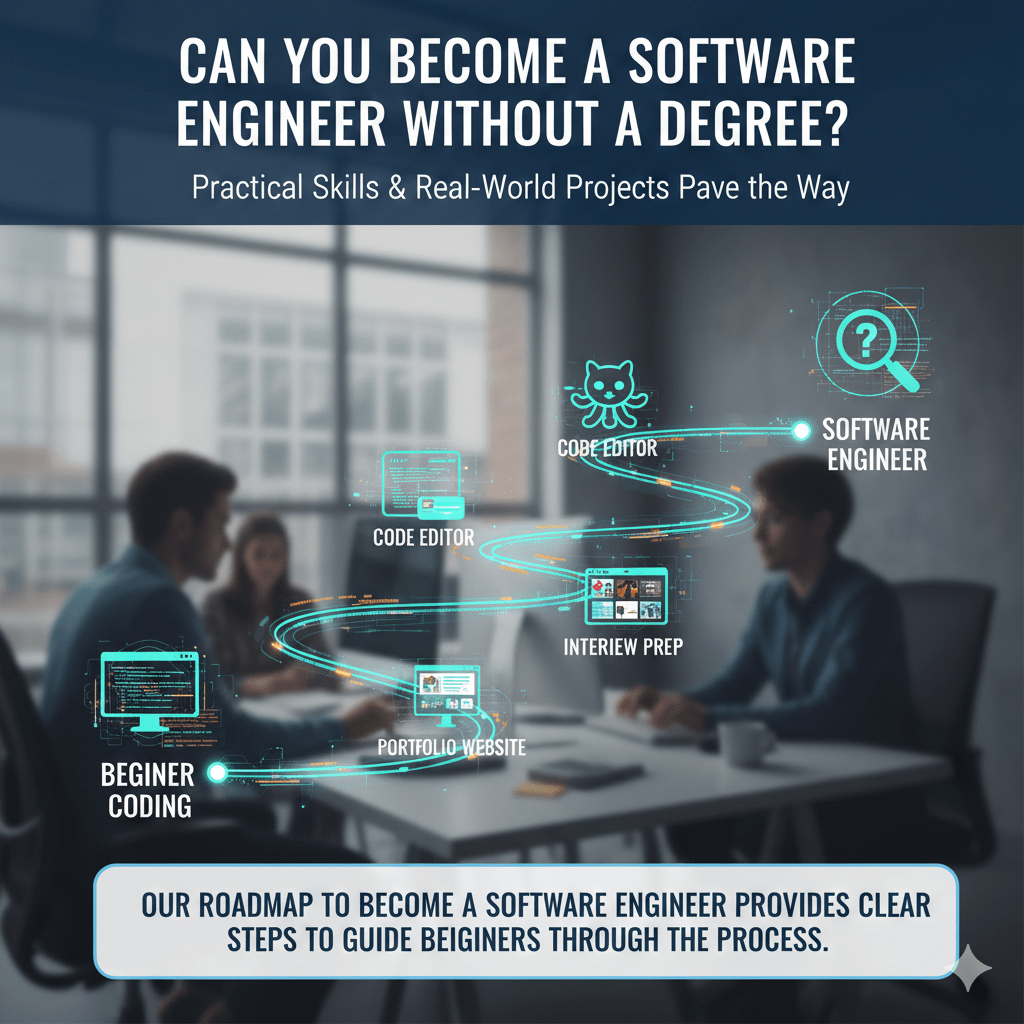
Many people wonder if a degree is mandatory to become a software engineer. The short answer is no, but reality is nuanced. Some companies still value degrees, while others focus entirely on skills and experience. Understanding what employers look for, building the right portfolio, and navigating the job market strategically are critical. Success comes from practical skills, consistent effort, and real-world projects, not paper qualifications alone.“Many aspiring developers wonder how to start a career without formal education. Our roadmap to become a software engineer provides clear steps to guide beginners through the process.
Why a Degree Isn’t Always Required
A degree can open doors, but it’s not the only way to enter tech. Many self-taught developers, bootcamp graduates, and career shifters land software engineering jobs without formal education. Companies like Google, Apple, and IBM hire candidates based on skills, coding ability, and problem-solving. Real experience and a strong portfolio often outweigh a degree, especially in startups and tech companies that value results over credentials.Even self-taught developers can land top jobs if they understand essential skills. Platforms like our Software Testing Basics guide help you gain practical knowledge without a degree.
Skills That Employers Actually Look For
To succeed without a degree, you must master core skills. These include programming languages like Python, JavaScript, or Java, data structures and algorithms, and version control with Git. Understanding databases, web development frameworks, and software design principles also helps. Employers want candidates who can solve real problems, write clean code, and work in teams. Soft skills like communication, adaptability, and collaboration are just as important as technical knowledge. Learning programming languages and frameworks is critical. For practical examples and tools, check out our Zenvekeypo4 software guide to understand real-world applications.
Pathways to Learning Without a Degree
There are several ways to gain the skills you need. Self-study using online tutorials, interactive coding platforms, and YouTube courses is popular. Coding boot camps provide structured learning and mentorship, often with job support. Internships, freelance projects, and contributing to open-source projects give hands-on experience. The key is to combine structured learning with real projects so that you can show employers you can deliver results. Interactive coding platforms can accelerate your learning. Our LTSpice software guide shows how practical simulation tools help beginners gain hands-on experience.”
Building a Portfolio That Gets You Hired
A portfolio is your most powerful tool when you lack a degree. Focus on projects that solve real problems. For example, create a web application for tracking expenses or a small API that automates a repetitive task. Document your code clearly, include screenshots, and explain your design choices. Recruiters often check GitHub activity, live project demos, and personal websites to gauge competence and initiative. Quality matters more than quantity.Focus on projects that demonstrate your skills. You can learn how to structure and present work effectively in our Kuta Software guide.
Understanding the Hiring Process
Landing a job without a degree requires strategic positioning. Many companies use ATS (Applicant Tracking Systems) to screen resumes. Highlight relevant skills, projects, and certifications. Networking can also bypass formal HR filters. Attend meetups, tech communities, or virtual events. Informational interviews help you understand company expectations. Companies increasingly hire based on problem-solving ability and portfolio evidence, not just formal education.Many companies use ATS systems to filter resumes. Our software testing fundamentals explains how to showcase your skills to pass automated screening.
Interview Preparation for Non-Degree Candidates
Interviews test both knowledge and application. For coding roles, practice data structures, algorithms, and problem-solving using platforms like LeetCode or HackerRank. Be ready to explain your projects, how you solved challenges, and the impact of your work. Behavioral interviews assess teamwork, adaptability, and learning ability. Even without a degree, a candidate who demonstrates initiative, persistence, and clarity of thought often outperforms degree holders.Practicing coding challenges is essential before interviews. Platforms explained in our Zenvekeypo4 software issues fix can help you simulate real interview problems.
Real-World Examples of Success
Many successful engineers started without a degree. David Heinemeier Hansson, creator of Ruby on Rails, never finished college. Bootcamp graduates have landed positions at Google, Microsoft, and Facebook. Startups frequently hire based on skill and output rather than paper credentials. These examples show that determination, focused learning, and smart portfolio building can bypass traditional education routes.Many bootcamp graduates have landed top jobs.
Mistakes to Avoid
One common mistake is learning without applying skills to real projects. Another is ignoring networking; even strong portfolios need visibility. Avoid chasing too many languages; mastery of a few key skills is better than shallow knowledge of many. Overestimating shortcuts or relying on certificates alone can also backfire. Focus on practical experience, consistent practice, and learning from feedback.
How Long Does It Take to Land a Job?
The timeline varies depending on your starting point, effort, and strategy. Many self-taught developers secure entry-level roles within 6–12 months of dedicated learning. Bootcamp graduates may achieve similar results faster due to structured guidance. Tracking progress through project completion, coding challenges, and mock interviews helps maintain focus. The key is consistent, deliberate practice combined with strategic portfolio building. Learn more about developer resources on Microsoft.
Why Soft Skills Matter as Much as Coding
Technical skills are necessary but not sufficient. Employers look for communication, problem-solving, teamwork, and adaptability. Demonstrating initiative, asking insightful questions, and learning from mistakes makes a strong impression. Non-degree candidates who excel in soft skills often compensate for lack of formal education, proving they can fit into team dynamics and deliver results under real-world constraints.Learn more about soft skills on Wikipedia.
Your 90-Day Action Plan
- Weeks 1–4: Master programming basics, version control, and problem-solving exercises.
- Weeks 5–8: Build 1–2 meaningful projects, document work, and publish online.
- Weeks 9–12: Apply to jobs, network, and prepare for technical interviews.
Focus on real deliverables, visible output, and measurable progress. This ensures readiness and confidence when approaching employers. - Follow this structured 90-day plan while referencing our software engineer career path to make consistent progress and build a strong portfolio.
What is the golden rule of programming?
Write code that is clear, simple, and maintainable. Focus on readability, efficiency, and problem-solving rather than clever shortcuts. Good code communicates intent and reduces errors, making it easier to debug and scale.
What is the #1 best paying job?
Tech leadership roles, such as engineering managers, principal engineers, or software architects, tend to earn the highest. Specialized fields like AI, cloud architecture, and cybersecurity also pay top salaries for experienced professionals.
Is 27 too late to start coding?
Not at all. Many people successfully switch careers in their late 20s, 30s, or beyond. What matters is consistent practice, real-world projects, and learning the right skills. Age is irrelevant compared to skill and persistence.
How to make $100,000 a year with no degree?
Focus on high-demand coding skills, build a strong portfolio, and target companies that hire for skill, not credentials. Freelancing, remote roles, or specialized software positions can also reach six figures without formal education.
What is the 40 20 40 rule in software engineering?
It’s about time allocation: spend 40% learning, 20% experimenting, and 40% building real projects. Balancing learning and doing ensures practical experience while mastering concepts, which is crucial for job readiness and skill growth.
Is 25 too old to start coding?
Absolutely not. Many successful developers started later than 25. What matters is focus, consistency, and applied learning. With structured effort, projects, and networking, you can land competitive software engineering roles regardless of age.
What engineers make $500,000 a year?
High-level positions like senior software architects, engineering directors, or AI specialists can reach this. Often, equity, bonuses, and experience in high-demand sectors drive these salaries, not just coding skills alone.
Conclusion
Becoming a software engineer without a degree is entirely possible but requires strategy, discipline, and practical skill-building. Degrees can help, but what really matters is what you can do, not what’s on paper. By focusing on real projects, mastering key technical skills, preparing for interviews, and networking strategically, you can compete with degree holders and carve out a successful career in software engineering.