

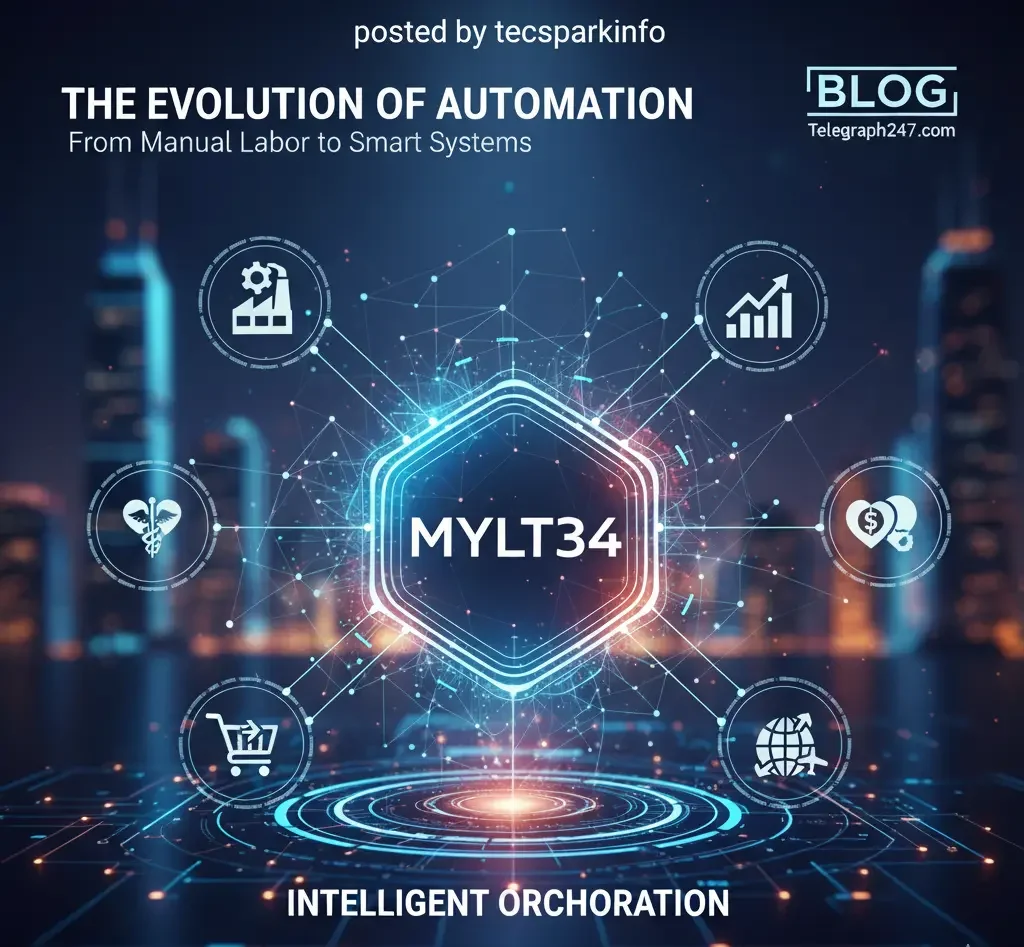
Automation has become the heartbeat of the modern digital world. From manufacturing and healthcare to finance and logistics, machines now handle tasks once dominated by humans. Yet, the next leap in this journey is not just about speed or efficiency—it’s about intelligence. This is where Mylt34 comes into play. Built on a foundation of artificial intelligence, data learning, and seamless system integration, this innovation represents a shift from basic automation to intelligent orchestration. Businesses worldwide are now exploring how it can transform their operations, increase profitability, and drive sustainable growth. For a deeper look into how emerging tech trends are shaping digital transformation, check out our detailed insight on Telegraph247.
The Evolution of Automation
From Manual Labor to Smart Systems
The industrial revolution introduced machines that reduced human effort. Decades later, the digital revolution brought computer-based automation capable of executing programmed instructions. However, these systems lacked adaptability—they could perform tasks, but they couldn’t learn or make decisions.
The introduction of AI-driven automation changed everything. Systems began analyzing data, predicting outcomes, and optimizing performance. Now, with advanced tools like Mylt34, automation has entered an era of awareness—machines that can think, learn, and evolve alongside human needs.
Why Intelligence Matters in Modern Automation
Traditional automation tools rely on predefined rules. Once a condition changes, human intervention becomes necessary. Intelligent automation, however, adapts in real time. It understands data patterns, recognizes inefficiencies, and reconfigures workflows dynamically. This not only minimizes human oversight but also creates a feedback loop that continually improves operations.
Understanding Mylt34: A New Benchmark for Automation
What Makes It Different
At its core, Mylt34 merges artificial intelligence, machine learning, and Internet of Things (IoT) connectivity. Instead of simply automating repetitive tasks, it creates an intelligent ecosystem where machines communicate, learn from each other, and make proactive decisions. This convergence allows businesses to operate with speed, accuracy, and unprecedented control. For professionals exploring advanced workflow tools and intelligent editing systems, our review of Nurad Editor Software offers additional insights into how modern software enhances automation precision. Where traditional systems stop at task execution, this technology pushes further—it interprets real-time data, anticipates issues, and optimizes performance before disruptions occur. The result is a more resilient and adaptive automation network.
Core Functionalities That Define Its Power
- AI-Driven Decision Engine: Processes vast amounts of operational data to make precise decisions in milliseconds.
- Predictive Maintenance and Analytics: Detects anomalies before they impact performance, reducing downtime.
- Seamless Integration: Connects effortlessly with ERP, CRM, and cloud systems, enabling a unified workflow.
- Scalability: Grows alongside business needs without additional infrastructure overhaul.
- User-Centric Interface: Empowers teams with visual dashboards for monitoring and fine-tuning automation processes.
These core features combine to create an environment where automation becomes strategic—not just operational.
The Transformative Impact Across Industries
Manufacturing
Factories worldwide are transitioning to smart production lines. Mylt34 introduces a layer of intelligence that automates not only mechanical operations but also decision-making. Sensors across the production line send real-time data into the system, which predicts equipment failures, adjusts schedules, and improves resource utilization. This reduces human error and boosts productivity, while ensuring safety through predictive monitoring.
Healthcare
In healthcare, precision and timing save lives. Intelligent automation enhances hospital management by streamlining administrative workloads such as patient scheduling, billing, and medical record management. Additionally, AI-driven analytics support doctors in diagnosing conditions more accurately and swiftly. Mylt34 enables hospitals to focus human effort on care, not paperwork—making healthcare delivery faster, safer, and more compassionate.
Finance
The financial sector is heavily dependent on accuracy and security. Mylt34 assists banks and financial institutions by automating fraud detection, improving compliance, and accelerating transaction approvals. Through intelligent risk modeling and data pattern analysis, it ensures every transaction passes through layers of real-time checks. This not only reduces human oversight but also increases customer trust and operational efficiency.
E-Commerce
E-commerce businesses operate in a high-speed, data-rich environment. Intelligent automation supports this dynamic ecosystem by analyzing buyer behavior, managing inventory automatically, and personalizing user experiences. The technology processes large volumes of purchase history and predicts customer preferences, helping brands tailor promotions and restock intelligently. This kind of automation enhances both profit margins and customer satisfaction.
Logistics and Supply Chain
In global logistics, timing and accuracy dictate success. Mylt34 empowers logistics operators with tools that monitor shipments in real time, optimize route planning, and automate warehouse management. By forecasting delays and rerouting deliveries autonomously, businesses minimize costs while meeting deadlines. This capability transforms logistics into a predictive and adaptive network rather than a reactive chain.
Key Benefits of Implementing Intelligent Automation
Enhanced Efficiency and Productivity
Intelligent automation reduces manual intervention in repetitive tasks, freeing employees to focus on innovation and problem-solving. Operations become faster, smoother, and more consistent, leading to measurable productivity gains across departments.
Cost Optimization
Automation not only cuts labor expenses but also prevents costly downtime through predictive insights. By maintaining equipment before failure and streamlining workflow inefficiencies, organizations save both time and money.
Error Reduction and Quality Assurance
Human error can cost businesses millions in corrections and reputation damage. Intelligent automation ensures tasks are executed with precision, maintaining consistent quality and compliance.
Flexibility and Scalability
As companies expand, so do their operational complexities. Mylt34 supports this evolution by scaling smoothly with demand—whether a small business or a multinational enterprise. This flexibility ensures long-term adaptability.
Improved Security and Compliance
Cybersecurity is a growing concern across industries. Built-in encryption and compliance monitoring ensure that sensitive data remains protected. Intelligent detection systems flag potential breaches before they escalate, maintaining trust and integrity.
The Technological Backbone Behind Intelligent Automation
Artificial Intelligence and Machine Learning
AI provides the foundation, enabling automation systems to analyze data, recognize trends, and make predictive decisions. Machine learning enhances this capability by allowing systems to learn from every interaction and refine performance autonomously.
IoT and Real-Time Connectivity
Internet of Things (IoT) integration ensures continuous data flow between devices, sensors, and control centers. This interconnectedness provides businesses with an end-to-end view of their operations, allowing real-time decision-making.
Cloud Infrastructure
Cloud integration makes the system accessible anywhere, ensuring business continuity even in remote or decentralized environments. The cloud’s scalability also reduces dependency on on-premise infrastructure.
Cybersecurity Framework
In intelligent automation, data protection is paramount. Mylt34’s encryption, access control, and behavioral monitoring tools ensure compliance with global data protection regulations. Businesses gain peace of mind knowing their data remains secure.
Preparing for Implementation
Assessing Business Needs
Before adopting any automation system, businesses must identify processes that would benefit most. Mapping out workflows helps determine where intelligent automation can deliver the highest ROI.
Choosing the Right Implementation Strategy
Successful deployment requires a step-by-step strategy—starting with pilot programs in low-risk areas and gradually expanding to core operations. This controlled approach minimizes disruption while ensuring measurable success.
Employee Training and Adoption
Technology is only as powerful as the people using it. Employee training should emphasize collaboration between human creativity and machine precision. When teams understand how automation supports their roles, adoption rates soar.
Continuous Optimization
Once deployed, automation should not remain static. Regular data analysis and feedback loops ensure the system adapts to new challenges and continuously improves performance.
The Future Landscape of Automation
AI Evolution
The next decade will witness exponential growth in AI sophistication. Systems will not only react to data but also anticipate organizational needs. This anticipatory intelligence will transform business models across every industry.
IoT Expansion and Smart Ecosystems
As IoT networks expand, automation will become more interconnected than ever. Factories, offices, and even cities will operate as smart ecosystems—communicating in real time to manage resources efficiently.
Personalized Automation Experiences
Future automation will prioritize personalization. Businesses will design custom workflows aligned with specific operational goals and employee strengths. This individualized approach will boost engagement and overall performance.
Sustainable Innovation
Sustainability will guide the next wave of automation. Intelligent systems will optimize energy usage, reduce waste, and support environmentally responsible production models. Automation will not just make work faster—it will make the planet cleaner.
Challenges and How to Overcome Them
Integration Complexity
Integrating new automation technologies into existing systems can be complex. Businesses must invest in thorough planning and expert guidance to ensure seamless compatibility.
Cost of Implementation
While initial investments can be significant, the long-term cost savings justify the expense. Adopting a phased rollout approach helps manage costs and demonstrates ROI over time.
Workforce Adaptation
Automation sometimes sparks fear of job loss. Clear communication and upskilling initiatives are key to ensuring employees understand automation as a tool that enhances—not replaces—their roles.
Data Privacy Concerns
Since automation relies heavily on data, privacy must remain a top priority. Implementing strict access controls and regular security audits keeps sensitive information protected.
Why Businesses Can’t Ignore Intelligent Automation
In a world where market demands shift overnight, agility is survival. Businesses that resist automation risk falling behind more adaptive competitors. By integrating tools like Mylt34, organizations unlock capabilities that redefine their competitive edge—speed, accuracy, and foresight. To understand how global leaders are advancing intelligent solutions, explore Microsoft’s approach to automation and AI. Automation is no longer optional; it’s essential. Whether optimizing manufacturing cycles, improving healthcare delivery, or securing financial systems, the ability to predict and adapt determines future success.
What makes Mylt34 different from traditional automation systems?
Mylt34 uses AI, machine learning, and IoT to make intelligent, real-time decisions—unlike older systems that rely on fixed rules.
Can Mylt34 be integrated with existing business software and systems?
It easily connects with existing ERP, CRM, and cloud platforms, making implementation smooth and cost-effective.
What industries can benefit the most from using Mylt34?
Mylt34 enhances efficiency and reduces costs in manufacturing, healthcare, finance, logistics, and e-commerce.
Conclusion
Automation is evolving from mechanical repetition to intelligent collaboration. The arrival of Mylt34 symbolizes this transformation—a convergence of artificial intelligence, IoT connectivity, and adaptive learning that empowers industries to move beyond traditional boundaries. Its impact reaches every corner of modern enterprise, from production lines and hospitals to online platforms and logistics networks.
As we step further into a future driven by data and innovation, intelligent automation will serve as the backbone of progress. Businesses embracing this change will not only optimize performance but also redefine what’s possible. The age of smart automation has arrived—and it’s reshaping our world one intelligent decision at a time.
The integration of predictive analytics and machine learning into automation is definitely a game-changer. It’s not just about automating tasks but also about creating systems that learn and adapt, which could revolutionize industries like healthcare and finance.